You came to the Caribbean for the beach. So did the wildlife. Throughout the islands, some stretches of sand come with company: two legs or four, from birds, to beasts to reptiles.
Some creatures are unexpected, others have earned celebrity status. Some are indigenous to their islands, while others have adapted over centuries to new climes.
Here are some Caribbean beaches where you may have to share your patch of sand – and get a glimpse of a local resident of the wilderness.
The Bahamas: Swimming Pigs
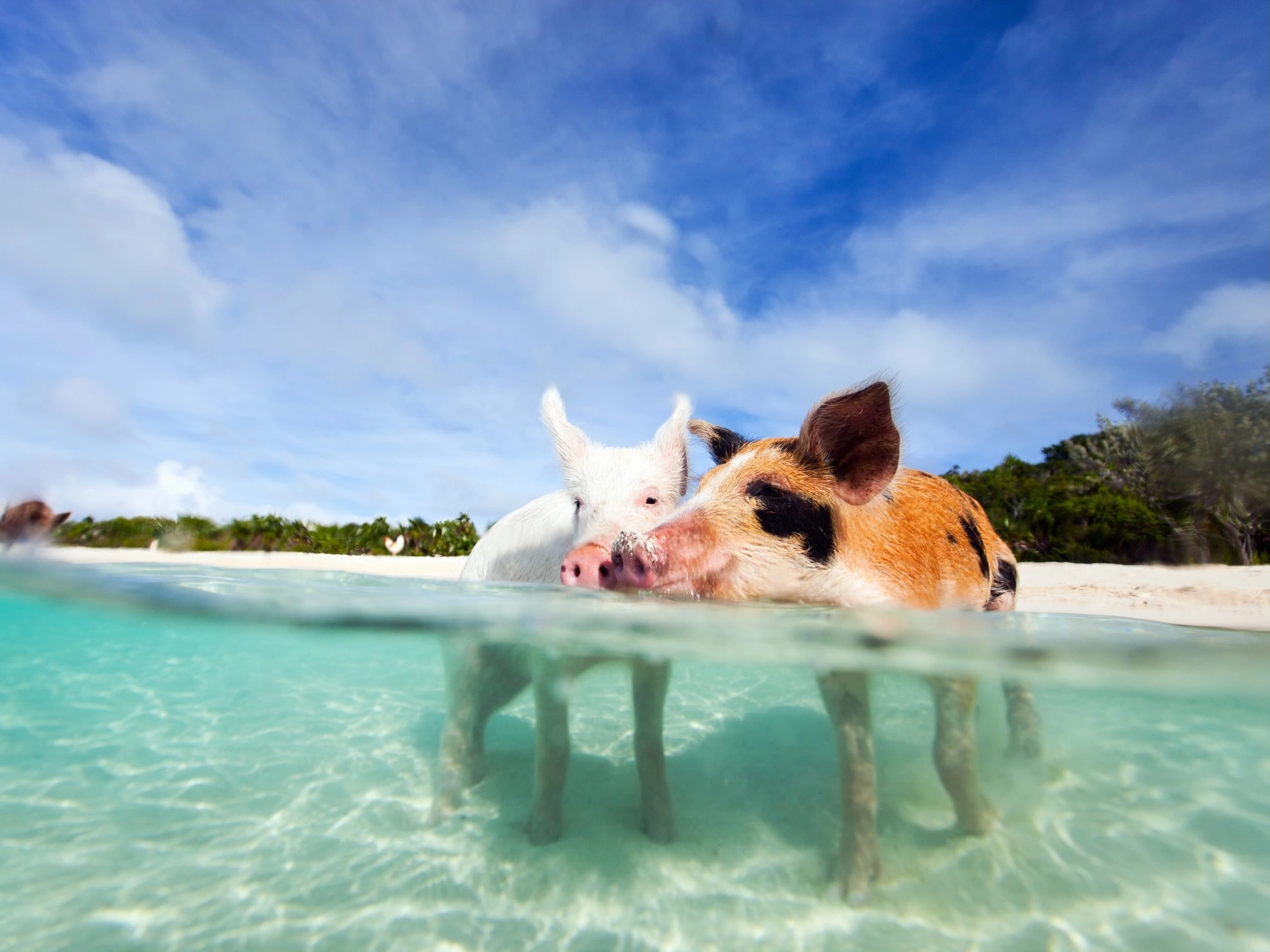
The Caribbean has plenty of marine mammals. The Bahamas famously has marine pigs.
The best-known live on Big Major Cay in the Exumas, now nicknamed Pig Beach. With no permanent human residents, the pigs have become its celebrities, frequently swimming into the shallows and sometimes paddling out toward arriving boats.
Exactly how pigs ended up on this uninhabited island remains the stuff of legends rather than settled history. What isn’t in doubt is their international fame: swimming with the pigs has become one of the signature experiences of the Exumas.
Cute pigs swimming in crystal clear waters: who doesn’t want to post that photo? Just remember to follow local guidance about feeding and interacting with them, and give them space.
The Bahamas: Iguanas on the Sand
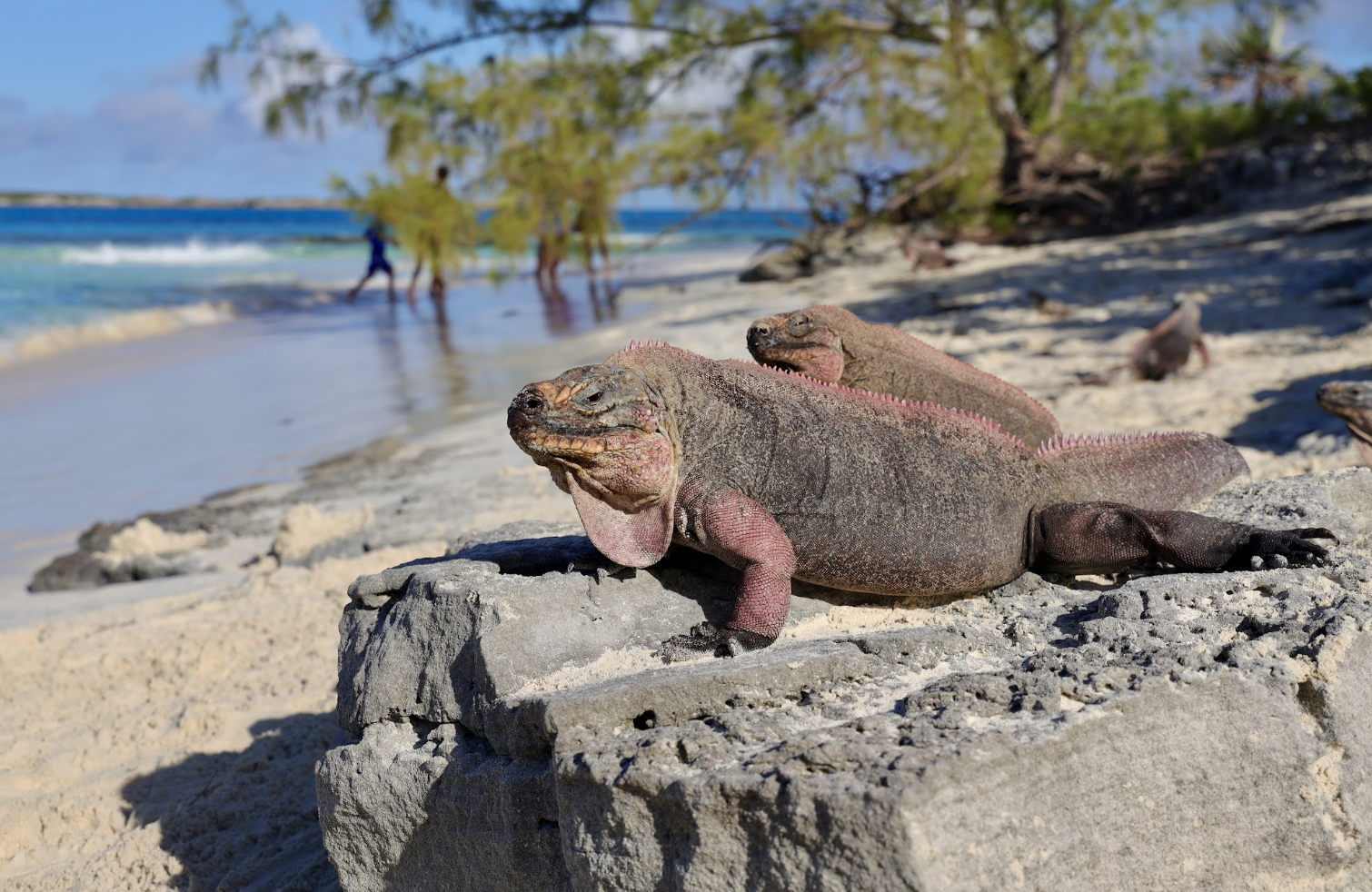
Pigs are the most unlikely mammals occupying Bahamian beaches – but some reptiles lay claim to fame, too. And these are indigenous to The Bahamas.
On several islands and cays in the Exumas, endangered Bahamian rock iguanas emerge from the vegetation and bask on beaches, looking like miniature survivors from the age of dinosaurs.
Reptile lovers will want to head to Allen Cays, whose famous iguanas can grow several feet long. Their habit of congregating near landing sites is partly the result of generations of visitors feeding them, something conservationists now discourage.
Bonaire: Pretty in Pink
Few birds look quite as much like an imaginary creature as a flamingo, and seeing one strolling regally through turquoise shallows only adds to the surreal effect.
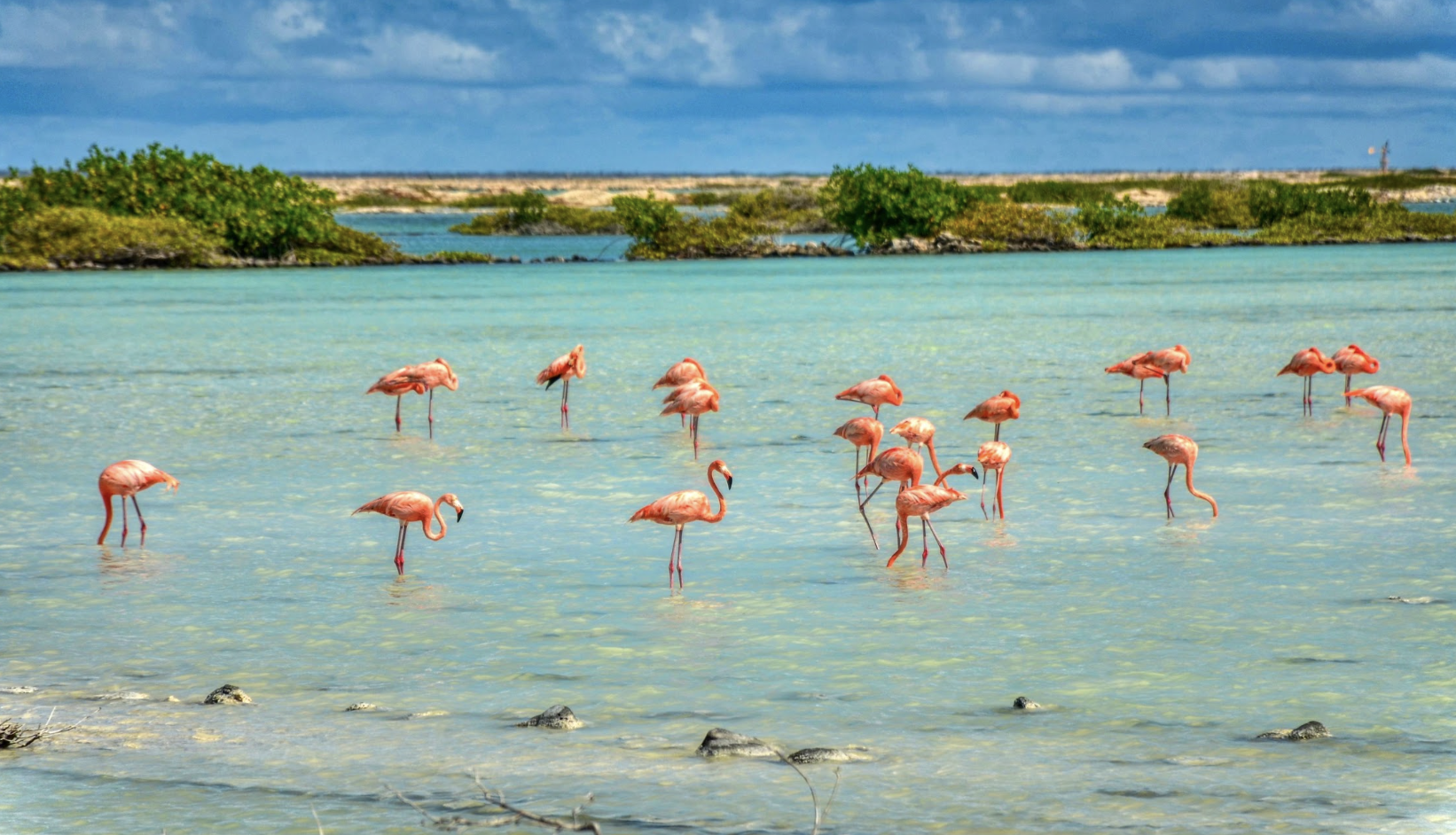
Head to the ‘ABC Islands’ in the southern Caribbean, specifically Bonaire.
The island is one of the most important places in the region for American flamingos, which thrive around its salt pans, lagoons and protected wetlands. Thousands may gather around Pekelmeer Flamingo Sanctuary in the island’s south, creating great streaks of pink against the brilliant white salt and blue Caribbean sky.
The sanctuary itself is protected and off-limits to visitors. But flamingos can often be spotted from surrounding roads and viewpoints, allowing travelers to see them behaving naturally without interfering with these wild creatures.
St. Kitts: Monkeys by the Sea
The renowned green vervet monkeys of St. Kitts have an unusual Caribbean backstory. Their ancestors were brought from West Africa centuries ago, and today their descendants are thoroughly established across St. Kitts and its sister island Nevis.
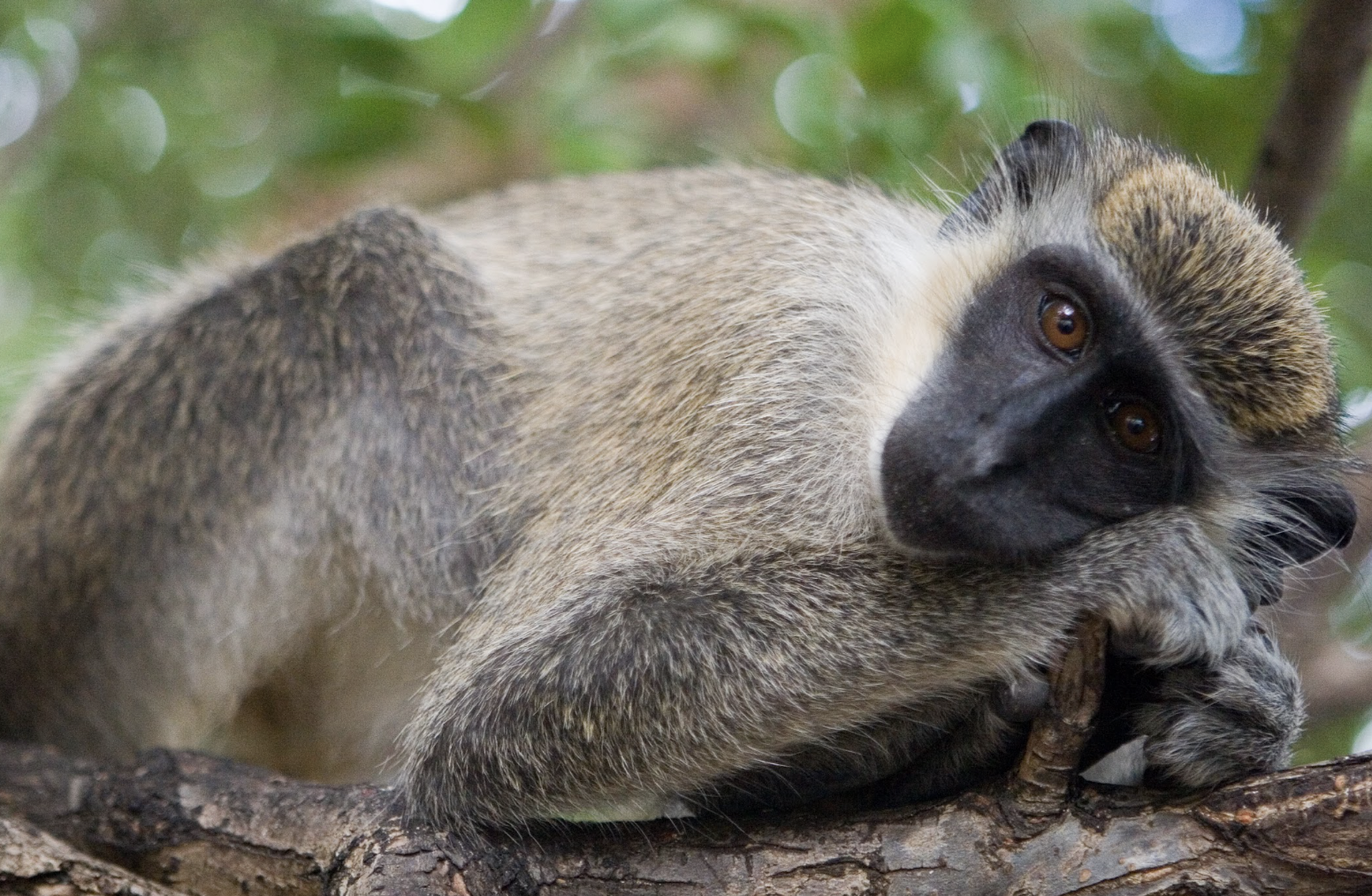
You may encounter them not just around beaches, but even along roadsides and wherever there’s vegetation. They’re charismatic, clever — and wild.
That’s an important distinction. Experts advise avoiding operators offering staged photographs with captive monkeys, feeding or handling them. Keep your eyes open and the chances are you’ll see one or more in the wild and have that story to take home.
Or how one cheeky monkey stole your ball off the Four Seasons Resort Nevis resort golf course, which a friend of mine never gets tired of telling (whether it’s true or not!)
Vieques: Horses Running Wild
On the Puerto Rican island of Vieques, thousands of free-roaming horses appear along roads, in fields, around communities — and sometimes beside the Caribbean itself. Descended from horses brought from Spain in the 16th century, they have become an unofficial symbol of Vieques.
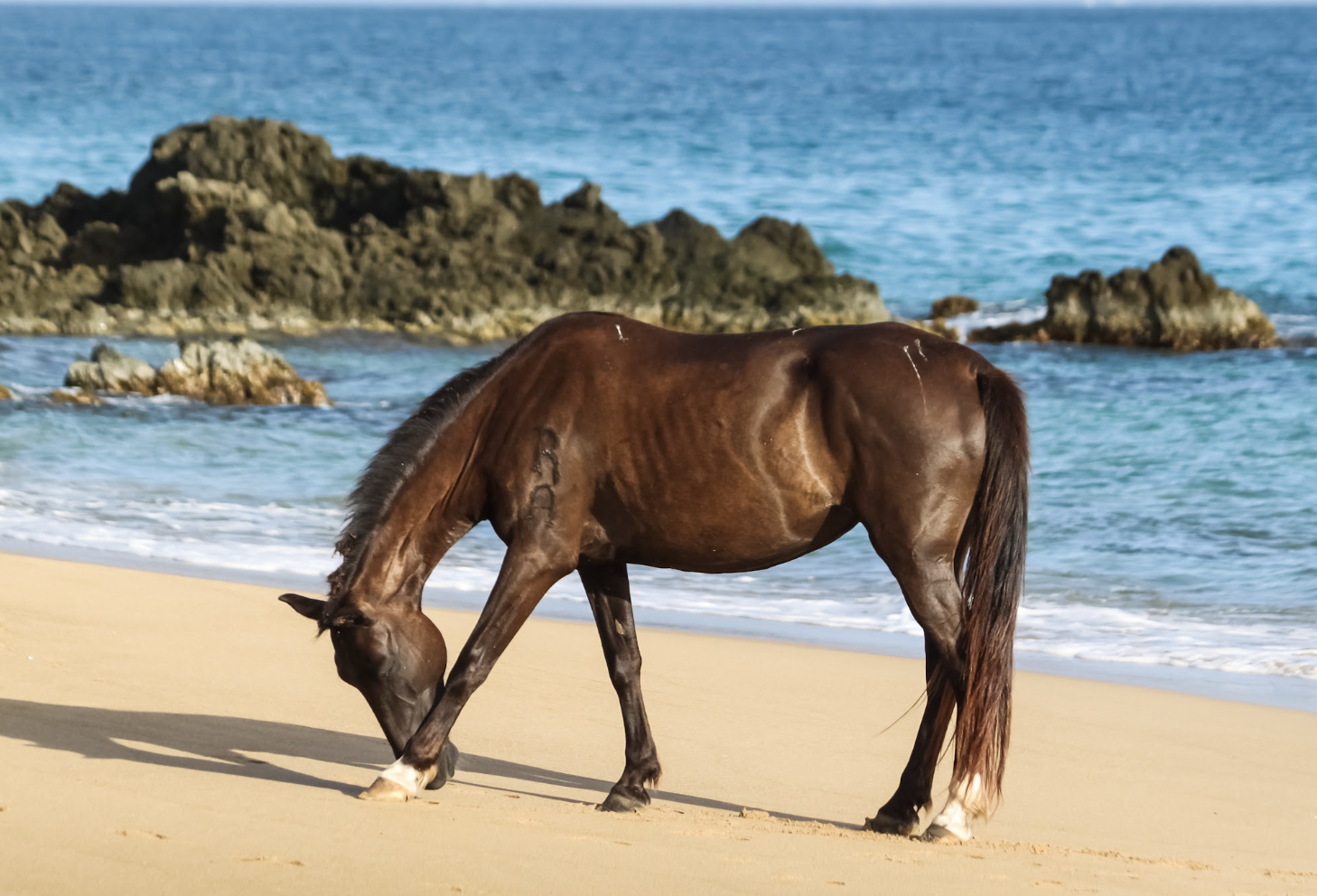
Seeing horses wandering through a tropical landscape is striking enough. Spotting them with palm trees, sand and sea in the background makes Vieques feel like nowhere else in the Caribbean.
They may look domesticated, and some are owned but allowed to roam freely. Regardless, visitors should treat them as wild animals rather than approaching, feeding or attempting to touch them.
The Caribbean’s beaches are our vacation playgrounds. They’re also nesting grounds, feeding grounds, habitats and, quite simply, home to many types of wildlife that can enlighten and inspire us on our island escapes.
START YOUR TRIP!
Images: Getty
All rights reserved. You are welcome to share this material from this page, but it may not be copied, re-published, broadcast, rewritten or redistributed.